Monday, November 19, 2007

Ramayana III/ As You Like It

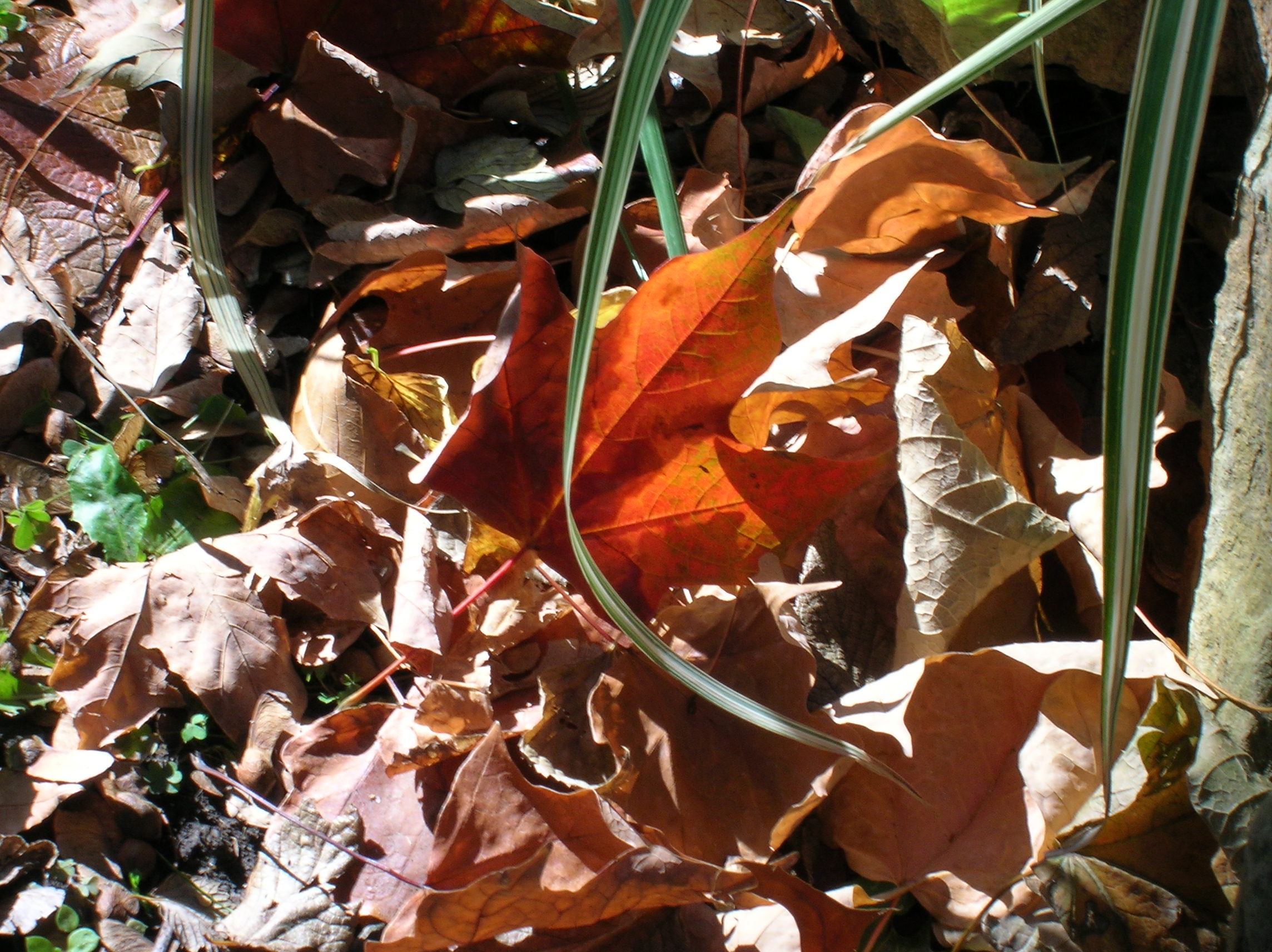
((fall Leaves outside my dorm))
Climbing the stairs leading up to my dorm a few minutes ago, I noticed that my feet crunched crisp fall leaves. Finally, with Thanksgiving right around the corner, autumn has come! Although it feels muggy outside, the leaves of certain trees have habits and patterns that cannot be swayed by Texas’ warm and crazy weather patterns. These past few days of mid-November, for example, have been warm and muggy where as a few weeks ago we all sat beside the turtle pond shivering and huddling together for warmth.
((We were both connected and disconnected at the turtle pond))

At the turtle pond, we decided that nature brings with it both community and calmness. The turtles have been not only conversations starters for me, but also are a source of entertainment and companionship for students as they stroll past with their friends or perhaps a significant other. Even as we sat beside it in the tower garden, I felt a strong bond between my fellow classmates but also felt strangely removed from the rest of UT’s student body as it rushed past. The grass, trees, water, and stones made me relaxed. They seemed to emanate a hidden story; a forgotten past just waiting to be unraveled. Indeed, I learned that the Tower Garden intends to commemorate the tower shooting. But, moving past the intended purpose, each flowering plant and each shriveled piece of grass told a story of its own.

Nature’s constancy and power to affect those that experience make me marvel. When reading both the Ramayana and As You Like It, I found that the characters also experience this power of and hidden meaning behind nature.

In the Ramayana, Rama and Sita travel through the forest in exile. Rama resists seductive Ravana’s sister, and they travel as “pilgrims”(1026). I find it very fitting that those in exile become pilgrims in nature since nature tends to bring out the very human and instinctive qualities of people. In nature we are better able to express ourselves and perhaps recover hidden qualities. And, as we saw in the Tower Garden, nature unites and also separates. The forest for Rama and Sita separated them from the royal world and united them in their natural love, just as the turtle pond separated us from the busy college lifestyle and united us with our friends and classmates.

((A real gazelle does not combine the small beauties of nature that make the “strange gazelle” so magnificent))
Nature also makes me take a step back and to take my guard down. This sense of ease, though, can be dangerous as seen by the “strange gazelle” (1031) of the Ramayana. Although the gazelle is possessed or bewitched, the qualities related to nature are what attract Sita: “it was the colour of gold splashed with silver, its flanks speckled as if with jeweled moons, its ears like lapis and its tail like rainbow, and it seemed to give off a flickering light” (1031). The small beauties of nature like the moon and rainbows combine together to create splendor and unnatural beauty. What tricks Sita, however, are the normal actions that the gazelle partakes in as it “move[s] back and forth, nibbling a blade, taking a gambol, twitching its blue ears” (1031). The dual side of the gazelle, being both fantastic and realistic, captivates Sita while the natural aspects of the animal hazardously make her believe in and desperately want it.

Sita’s desperate desire to attain the gazelle, in fact, shows the connection that humans have with nature which makes us identify with creatures. Environmentalist and Duke Senior alike would say that animals and the environment need to be protected and conserved. Duke Senior in As You Like It persistently wanted to find out who made the deer weep since its death troubled him so much. Both the gazelle and the deer captivate its audience just as the exquisiteness of nature leads poets and writers to glorify and explore meaning of nature itself and life in general.
((Somehow this forest scene holds emotions of solitude and mystery))
Indeed, just as I felt the parts of nature had stories just waiting to be told, the trees on the Forest of Arden hold a tale for Rosalind and Orlando. Orlando proclaims, “these trees shall be my books and in their barks my thoughts I’ll character” (1091). They plan to lend meaning to nature and imbibe it with their emotions. And, I believe that emotions are exactly what nature encourages. It can spark passion as it does for Sita and for Duke Senior, it can serve as a storage place for nostalgia, or it can make us calm and meditative. Connected through time and tell, and disconnected in space.

Monday, November 12, 2007

Identity and Universal Themes


((Rama and Sita))
The Ramayana story has a fairy-tale ending with Swallow helping her family and being united with her long lost lover, yet I could not help but find the part of the story in which Swallow realizes she is Sita and that the Sage of Wu Shan is Rama, awkward and funny. Is it not odd that Sita and Rama did not recognize the other as the love of their life? In real life, if someone does not recognize a significant person in his or her life, the moment of realization is certainly uncomfortable and embarrassing since society (and human nature) expects us to remember these important people. Sita, or Swallow, does not seem awkward and immediately embraces and kisses the Sage/Rama; imagining this scene in my head, though, made me chuckle at this corny quality that parallels many popular chick-flick movies. This scene aside, I found that the tale of Ramayana serves as an example of finding one’s identity.
((Who are you?))
The Sage sends Swallow on a mission to find her true identity, and asks “are you willing to learn it?”(1018). She trembles at this idea, but knows that she must do it and that she has “to go! To explore!” (1018). This mission to discover her identity seems very similar to the process of discovery learning. Swallow enters into her past self just as we enter into the minds of others through the use of our sympathetic imaginations. Exploring our identity, though, can be scary (just as Swallow fears) as we enter into a world of newness. I notice that Rama and Sita also considered themselves “pilgrims” (1026) as they left in exile. Indeed, they are pilgrims on a journey to first lose and then rediscover the love they have for each other as they venture into new lands and supernatural worlds. Swallow must also relive her past life as Sita in order to find her identity. Similiarly, we must look at the examples of the leaders of the past in order to find qualities which resonate with our true identity. Maybe that past simply means rediscovering the innocence of our childhood. In this way “the past will enter” and we will “become what [we] have been” (1019).
((Waking up brings us back to reality, but we can still find ourselves in our imagination and dream-like states))
Just as Alice in Wonderland wakes from her dream of her adventures in Wonderland, so too does Swallow find herself through a dream state. Alice is aware that she is both the curious and questioning individual in her dream and the waking and childish girl of the present just as Swallow becomes aware that she was both the queenly Sita and brave Swallow. Sita’s plight throughout the Ramayana story makes Swallow relive her past and rekindle old emotions.
((Some of the Elgin Marbles from Greece, in Britian))
At the same time, Sita’s personal story seems to overlap with universal issues and ideas. The practice of parents selling their children as a way to sustain their family, for example, reminds me of the rampant sex trafficking in certain countries like Thailand. Ravana’s logic in refusing to return Sita, that if he were to return her “for what reason could [he] refuse to return the rest” (1053) of the women, is also exactly the same argument England employs in the Elgin Marbles Controversy. In this ongoing international debate, Britain refuses to return the carvings from the pediments of the Parthenon at the Acropolis in Greece. Meanwhile, Greece demands that Britain return the carvings which, they claim, were illegally stolen and which are part of its national identity. If Britain were to return the Parthenon carvings, then other countries would feel obligated to return pieces of artwork to their respective countries of origin. Thus, Ravana fears a domino effect just as nations today fear the domino effect of issues of ownership. And finally, like Julie C suggests, the Ramayana story also highlights gender roles and the empowerment of women.

However, while Julie believes that the story “seeks to combat gender roles,” I believe that the story is often chauvinistic. The language of the author and words from Rama, to me, often stereotyped women. Hanuman, for example, states that “such is the nature of women [. . .]—they must have pretty pets and pretty presents, and continually urge their husbands to supply them with these”(1047). In the beginning of the tale Swallow responds “submissively” (1048) to her captors, and later Lakshmana is blamed for listening to a female rather than a male. I do agree that Swallow/Sita breaks these stereotypes with her courage, steadfastness, and cleverness; the story, though, is obviously written from a male perspective and perpetuates stereotypes of women.

Thus, even as Sita finds her identity, the story of Ramayana does not always combat gender roles. We must therefore be careful in following the example of any written word, and we must think for ourselves in interpreting the messages. The story of Ramayana, however, does seem to offer countless examples about finding ones identity and seems to reach across cultures and be pertinent to current worldwide issues.